The SOE
in Cannes
Tribute to Guillaume Evangelista, resistance fighter and political deportee.
Through documents, photographs, and archives, this site retraces his involvement in clandestine networks, his arrest, his deportation, and the tributes paid to him.

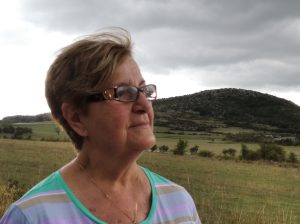
Joëlle Crespi Evangelista Daughter of Guillaume Evangelista
“This site was born from an investigation led by a daughter to rediscover the story that her father, like so many deportees, had almost never told.”
Daughter of Guillaume Evangelista, a Cannes resistance fighter and political deportee, Joëlle Crespi Evangelista received few details from her father regarding his arrest and deportation.
The discovery of documents later led her to undertake research in Cannes, France, and Germany, with archival services and memorial sites.
She gradually reconstructs his involvement in the Buckmaster networks, the conditions of his detention, and his journey through the concentration camps.
Fighting
in the shadows
Born from the unification of several British services, the Special Operations Executive was responsible for conducting clandestine operations, supporting local resistance, and preparing for the reconquest of occupied territories.
The SOE was born from the merger of Military Intelligence Research, a military research and intelligence service attached to the War Office, and Section D, specialized in sabotage operations and previously linked to MI6.
The new organization was placed under the supervision of the British Ministry of Economic Warfare and reported directly to the government of Winston Churchill.
Its mission consisted of conducting deception, sabotage, and guerrilla operations in occupied territories to disrupt German forces, support local populations, and encourage the development of resistance movements.
The SOE adopted a resolutely offensive method. Its actions were intended to prepare for the Allied landings and participate in the reconquest of the European continent by arming, training, and coordinating as many resistance fighters as possible.
Training centers, called Training Schools, were established in England and Scotland. Significant logistical resources were also mobilized by the Royal Navy and the Royal Air Force to transport agents, weapons, and equipment.
The French section of the SOE was placed in 1941 under the responsibility of Reserve Lieutenant-Colonel Maurice Buckmaster, who had previously lived in France and worked as a journalist.
The networks and sub-networks sought three essential qualities in their future agents: intelligence, determination, and discretion. Their recruitment was, in principle, intended to transcend political affiliations and opinions.
The SOE provided French networks with considerable quantities of equipment: rifles, Sten submachine guns, mortars, shells, grenades, radio transceivers, clothing, combat boots, and financial resources.
These missions directly exposed agents and resistance fighters. Many were arrested, interrogated, tortured, imprisoned, deported, or executed by German forces.
After the end of the war, the SOE was dissolved. However, part of its methods, skills, and experience was taken up by other British intelligence and clandestine action structures.
The chapters
of his story
From his involvement in Cannes to the deportation camps, each chapter brings together texts, photographs, and archival documents.
 01
01
Guillaume Evangelista
Typographer, resistance fighter, and agent of the Buckmaster network.
 02
02
His resistance in Cannes
The Aegitna printing works, the SOE, and German repression.
 03
03
The Camps
Compiègne, Neuengamme, Sachsenhausen, and Lichterfelde.
 04
04
Honors and Distinctions
Decorations, medals, and posthumous tributes.
 05
05
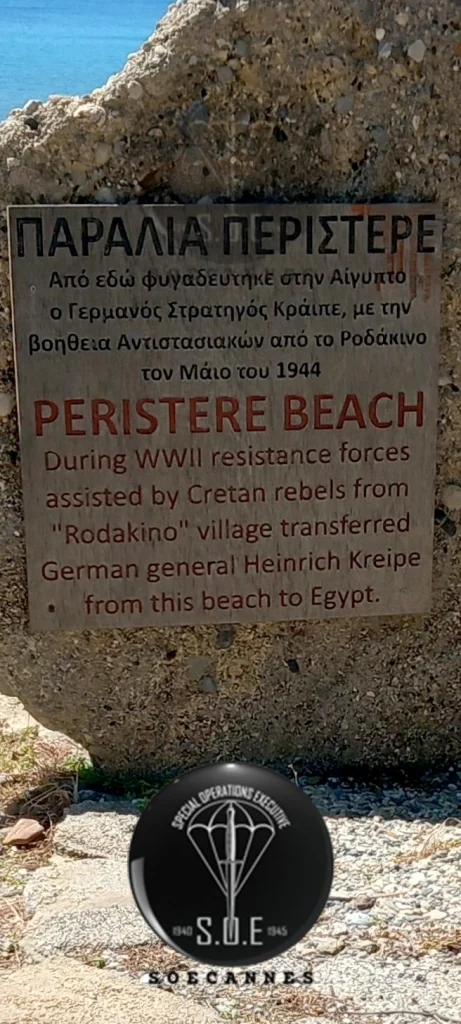
The SOE in Crete
The Cretan Resistance and the operation against Heinrich Kreipe.
Preserving archives means giving a voice back to those whom History had condemned to silence.
This site pays tribute to Guillaume Evangelista as well as to the resistance fighters, deportees, and victims who fought for freedom.
Begin the story
